
We Gotta Groove – The Brother Studios Years, a brand novel 73-be conscious field role, picks up the memoir of the Seaside Boys at a deeply ordinary juncture in their profession. On the face of it, they were attend on high. Their industrial fortunes had been revived by the monumental success of some timely compilations: within the US, 1974’s Endless Summer season bought 3m copies, while 20 Golden Greats turned Britain’s 2d-biggest-selling album of 1976. Their chief Brian Wilson became it looks, miraculously, match match after years of addiction and mental nicely being struggles. “BRIAN IS BACK!” ran the advertising slogan for 15 Substantial Ones, the first Seaside Boys album to undergo his establish as sole producer since Pet Sounds, and the first to be made at their newly founded Brother Studios. Buoyed by a media advertising and marketing campaign that incorporated an hour-long TV special, it duly turned their most worthwhile album of latest cloth in 11 years.

However, as ever with the Seaside Boys, it became extra advanced than it at first gave the impression. As a succession of aspects illustrious, Wilson didn’t seem like terribly nicely the least bit. A Rolling Stone creator dispatched to meet him became startled when Wilson asked him for tablets midway thru the interview, and expressed grave doubts about Eugene Landy, the controversial psychologist supposedly to blame for Wilson’s recuperation. A Melody Maker journalist who noticed the Seaside Boys dwell that summer season declared that Wilson “shouldn’t be subjected to being propped up onstage”, illustrious that he regarded visibly distressed and made no musical contribution. In location of a triumphant return, 15 Substantial Ones became a impulsively thrown-collectively mess of masks variations and wan novel cloth, its classes marked by disagreements, now not least over whether Wilson became even capable of manufacturing an album. The band’s contributors openly disparaged it on liberate: Dennis Wilson bluntly described one be conscious as a “fragment of shit”. The public who bought it regarded to lose passion swiftly: the Seaside Boys didn’t ranking yet any other Top 10 album of latest cloth for 36 years.
There are americans which dangle made some wild retrospective claims for 15 Substantial Ones’ creative merit, amongst them Brian Wilson himself, nonetheless this field role’s compilers tactfully skirt around its existence irrespective of its roots in Brother Studios. The distinctive album isn’t incorporated, its presence here confined to a scattering of outtakes, none of which seem match to trigger anybody to reassess their views, until your idea is likely to be swayed by the sound of Mike Love crooning his formulation thru Johnny Preston’s Indigenous American-themed 1959 novelty hit Running Endure. Certainly, the inclusion of a handful of tracks that predate 15 Substantial Ones (from classes abandoned on myth of of Wilson’s reluctance to receive entangled) counsel the Seaside Boys will dangle been making better music earlier than his “recovery”: even in their unfinished express, Dennis Wilson’s Holy Man and 10,000 Years Ago are vastly superior to anything else the Seaside Boys’ comeback needed to present.
As an different, We Gotta Groove concentrates its attention on 15 Substantial Ones’ less commercially worthwhile successor. Completely composed and mostly played by Wilson, 1977’s Seaside Boys Love You became both a thorough departure – it’s dominated by the sound of synthesisers – and a drastic enchancment: the opening seconds of Let Us Streak on This Means dangle extra existence in them than every be conscious on 15 Substantial Ones attach collectively. That isn’t the identical as suggesting it’s a masterpiece. Your enjoyment of it’s miles likely to depend on whether you scrutinize Wilson’s lyrics as charmingly naive, an gripping insight into a broken psyche or appropriate kind totally excruciating. “He sits within the attend of his microphone, he speaks in this kind of manly tone,” affords his appraisal of discuss display host Johnny Carson. “Saturn has rings all around it,” notes Solar Draw. “I searched the sky and I stumbled on it.”
Restful, you don’t prefer for melodies graceful ample to counsel that Wilson’s main songwriting capability remained intact, irrespective of all that had been visited upon it within the earlier decade: The Night Modified into once So Younger, I Wanna Pick You Up, Airplane. Whatever you make of the lyrics to Curler Skating Child – “I scramble and receive my skates on and I meet up along with her / We enact it maintaining hands, it’s so chilly I scramble ‘brrr’” – the tune and the stacked vocal harmonies are unprecedented.
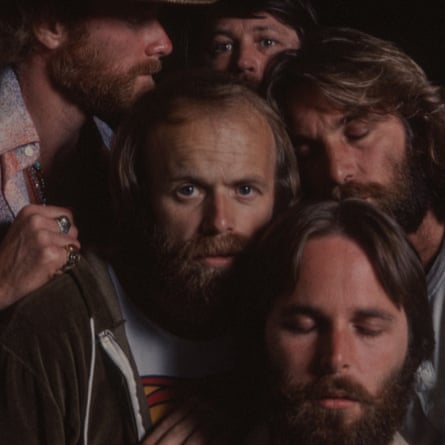
Despite its muted industrial response, Seaside Boys Love You regarded to embolden Wilson additional. His next mission became a role of songs that drew on pre-rock’n’roll pop, an idea out of left discipline, nonetheless now not one entirely without precedent. Wilson became a monumental fan of George Gershwin and the Four Newbies, a 50s vocal neighborhood whose oeuvre drew extensively on pre-war pop and jazz: a cursory eavesdrop on their 1955 album Four Newbies and 5 Trombones unearths how indispensable they influenced the Seaside Boys’ harmonies. Furthermore, his dangle work had now and then regarded to reach attend past the birth of rock’n’roll. It’s now not a monumental stretch to bear in mind Pet Sounds’s You Restful Mediate in Me or Don’t Focus on (Build Your Head on My Shoulder) hailing from the 30s or 40s reasonably than 1966, even supposing they were less speak in their intentions than his novel cloth: Wilson supposed for Frank Sinatra to divulge Restful I Dream of It. Sinatra turned him down, nonetheless irrespective of: it’s laborious to bear in mind a model extra potent than Wilson’s, his cigarette-ravaged verbalize amplifying the make of its wistful lyrics. One more sumptuously orchestrated ballad, It’s Over Now, is equally monumental, as is Wilson’s masks of the Thirties hit Deep Pink.
The idea wasn’t totally out of step with contemporary trends – now not long after Wilson recorded these songs, Willie Nelson released Stardust, an extraordinary album of Substantial American Songbook requirements that bought thousands and thousands – nonetheless somehow issues went off piste. First, Wilson taped a series of tracks that regarded to dangle nothing to enact with his novel idea, amongst them the frankly appalling Hello Little Tomboy, a song that’s even creepier than its title suggests. Then the tracklisting of the projected album, Grownup/Child, became padded out with early 70s outtakes, it looks within the assumption that the enviornment became determined to listen to HELP Is on Its Means, a 1971 paean to organic food, and its capability to give protection to in opposition to “doughy lumps, abdominal pumps, enemas too” (neither the outtakes nor Hello Little Tomboy are here, the latter presumably excised on the grounds of taste). Then all of the article became scrapped: in a weird and wonderful echo of Smile, Mike Love’s response to the forties-style songs became: “What the fuck enact you mediate you’re doing?”
It’s a predict that looks extra germane to the remainder of the Seaside Boys’ recording profession. Their next liberate turned out to be the abysmal MIU Album, home to the tennis-themed Match Level of Our Love, which succeeded in making the lyrics on Seaside Boys Love You seem as erudite and multi-layered as Unhappy Eyed Woman of the Lowlands. It says something referring to the Seaside Boys’ increasingly extra catastrophic judgment that the supreme be conscious to outlive the Grownup/Child classes and make it on to MIU became Hello Little Tomboy. You’ve got thought MIU represented the band’s creative nadir, till you heard its be conscious up, LA (Gentle Album). And whilst you thought that became their nadir, you hadn’t heard 1980’s Keepin’ the Summer season Alive, and so on and so on.
It’s a sorry memoir that locations the music on We Gotta Groove in context: wildly variable in quality, even at its handiest now not within the identical league as the stuff that made the Seaside Boys celebrated; for followers handiest. However, filled with weird and wonderful diversions and what proved to be ineffective ends, it’s seldom uninteresting: in actual fact, the Seaside Boys would never be so bright again.