
Not every fan of Elgar’s Violin Concerto might potentially be enchanted by Christian Tetzlaff’s recent rendition, but it certainly leaves a mark. The most striking aspect is the lively tempo of the performance, which considerably reduces the duration compared to other interpretations: by the time Vilde Frang takes her final bow, Tetzlaff could already be making his exit. Under the dynamic direction of conductor John Storgårds—who injects an electrifying spirit into the BBC Philharmonic—Tetzlaff navigates through emotionally charged passages with a sense of urgency rather than lingering on them, resulting in an exhilarating experience. However, this method can make some intricate sections feel slightly fragmented; Tetzlaff plays with a fierce intensity akin to a hawk circling its prey, always ready for action.
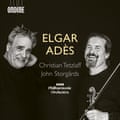
This interpretation transcends mere speed; there are instances where Tetzlaff adopts a reflective approach when others might lean towards assertiveness—and vice versa—leading to surprising emotional shifts that delightfully challenge expectations.
The Dynamic Energy of Adès’s Work
The same vibrant dynamism is evident in Thomas adès’s Violin Concerto from 2005, titled Concentric Paths, where Tetzlaff emphasizes urgency over lyrical beauty while Storgårds orchestrates sweeping movements that resonate powerfully throughout the composition. The robust second movement unfolds with an overwhelming sense of drive; concurrently, the third movement features an engaging melody underpinned by deep orchestral bass lines that evoke centrifugal force.
Listen on Apple Music or via Spotify