
Nadia boulanger (1887-1979) is celebrated today as a transformative educator who significantly influenced the neoclassical movement among composers across generations in both Europe and America. Along with her teaching prowess, she was a skilled conductor and organist.Although she initially aspired to be a composer, her ambitions took a backseat in the early 1920s following the heartbreaking deaths of her exceptionally talented younger sister Lili and her mentor, pianist and composer Raoul Pugno.
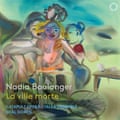
Boulanger worked alongside Pugno on La Ville Morte, an enterprising four-act opera inspired by Gabriele D’Annunzio’s play. Although it was scheduled to premiere at the Opéra-Comique in Paris in 1914, its debut was thwarted by the outbreak of World War I. Today, only vocal versions of this opera exist; though, it has been minimally arranged for an ensemble of eleven musicians for recent performances held last year in New York City.
The title “La Ville Morte,” or “The Dead City,” refers to Mycenae—a backdrop where intricate stories unfold involving love, ambition, and desire among four archaeologists amidst ancient ruins. Musically speaking, Boulanger’s composition reflects influences from Wagner, Fauré, as well as early Debussy; yet it struggles to fully embody these styles or maintain dramatic tension leading up to its concise final act—despite commendable efforts from conductor Neal Goren along with his dedicated cast.