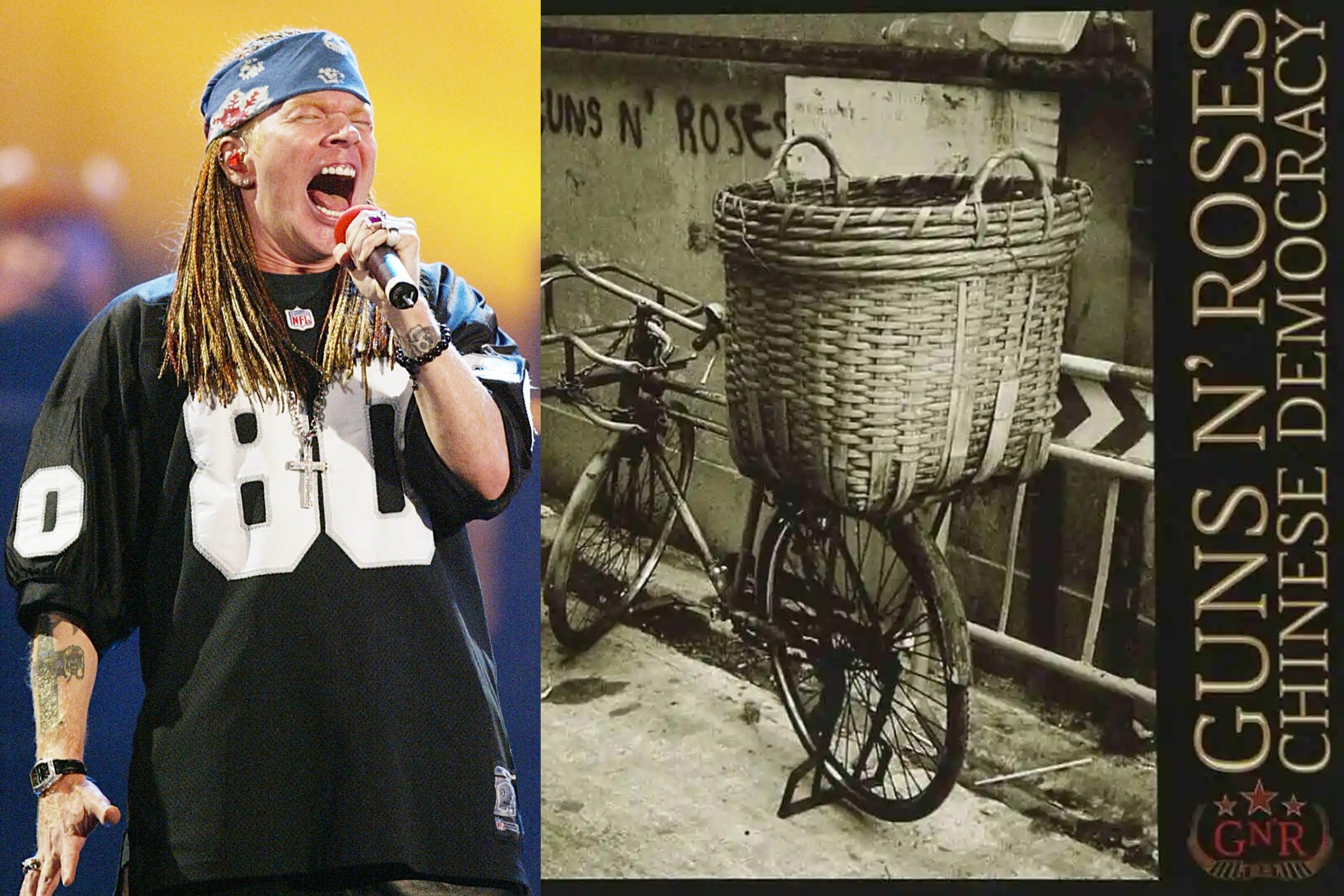
When Guns N’ Roses’ Chinese Democracy was finally released in 2008, nearly ten years after its initial conception, it felt more like a prolonged conclusion than a triumphant return.
Axl Rose, the legendary frontman of the band, was the sole original member remaining at that point. For many long-time fans, the true spirit of Guns N’ Roses had diminished well before this album became available. While some listeners admire the elaborate production that developed over time, opinions on this record are polarized—not necessarily due to its artistic quality but rather because of what it represents in the band’s legacy.
Alan Niven, who managed Guns N’ Roses from 1986 to 1991, perceives this album as a notable shift away from what originally made the band exceptional. In a recent episode of the podcast The Quest for Food for Distortion, he shared his candid views. he characterized both Chinese Democracy and 1993’s The Spaghetti Incident? as outcomes of an internal conflict that he believes fundamentally altered their trajectory.
“Goldstein,” who was just a tour manager at that time, has inflated his influence on our marketing strategy,” he remarked (via Ultimate Guitar). “He performed admirably in his role as tour manager; I could always rely on him during our travels.”
Niven elaborated: “So yes, Doug is proficient at managing tours—that’s where his strengths lie.Let’s clarify something: this isn’t merely opinion; it’s historical fact we can all review together.Once he andMichele Anthony brought about their coup within our ranks, what did we receive from Guns N’ Roses? We got an album likeThe Spaghetti Incident?, followed by an Axl solo project masquerading under our name.”
“To me…the most significant flaw of that record was its lack of energy; it felt devoid of life,” he commented regarding. “Labeling it as Guns N’ Roses wasn’t accurate—it essentially represented Axl’s solo work since ’91.” He pondered how much potential slipped away during those years: “Who knows what music they could have produced if they had stayed united?”
Niven’s insights focus less on musical critique and more on safeguarding the band’s heritage. For him,marks a crucial juncture when Guns N’ Roses transitioned from being a collective entity to serving solely one individual’s vision.
A New Era: Axl Rose Assumes Command
Persistent Tensions From Early days Resurface Over Time
Niven attributes this conversion primarily to one key factor: “Axl took charge over everything.” He recounted ongoing conflicts between Rose and other members dating back to their early days together. One notable incident involved rhythm guitarist, whose disillusionment began shortly after joining forces with them.
“My passion for creating rock music effectively ended when I joined GN’R back in September ’86,” Stradlin later reflected about those early days filled with pressure and anxiety during their first tour alongside The Cult.
“I barely made it through three songs before I returned to my room only to find Izzy looking frazzled,” he vividly recalled about one encounter during that stressful period.
“He barged into my space and collapsed onto my couch saying ‘That guy makes us miserable every single day.’ It’s something I’ll never forget.”