Helmut Lachenmann celebrates his 90th birthday this week, yet his contributions have largely gone unnoticed in the UK, where his compositions remain underappreciated and infrequently performed. Across various regions in europe, however, he is esteemed as one of the most significant and influential composers of contemporary music. His works have introduced a distinctive auditory landscape through meticulous examination of instrumental techniques and the expanded potential they offer.
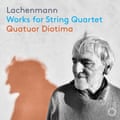
Central to Lachenmann’s innovative approach are his three string quartets—Gran Torso, composed between 1971-72 with a revision in 1988; Reigen Seliger geister (Round of Blessed Spirits, from 1989); and Grido (Wail, released in 2002). These pieces explore every aspect of string instruments—from scrolls to tailpieces—unearthing their sonic capabilities. They challenge conventional boundaries between noise and music while adhering to robust formal structures that resonate with musical integrity.
The Quatuor Diotima has collaborated closely with Lachenmann for over two decades, resulting in performances that exude remarkable authority and confidence. Their interpretations invite listeners into an extraordinary auditory experience that captivates the creativity.